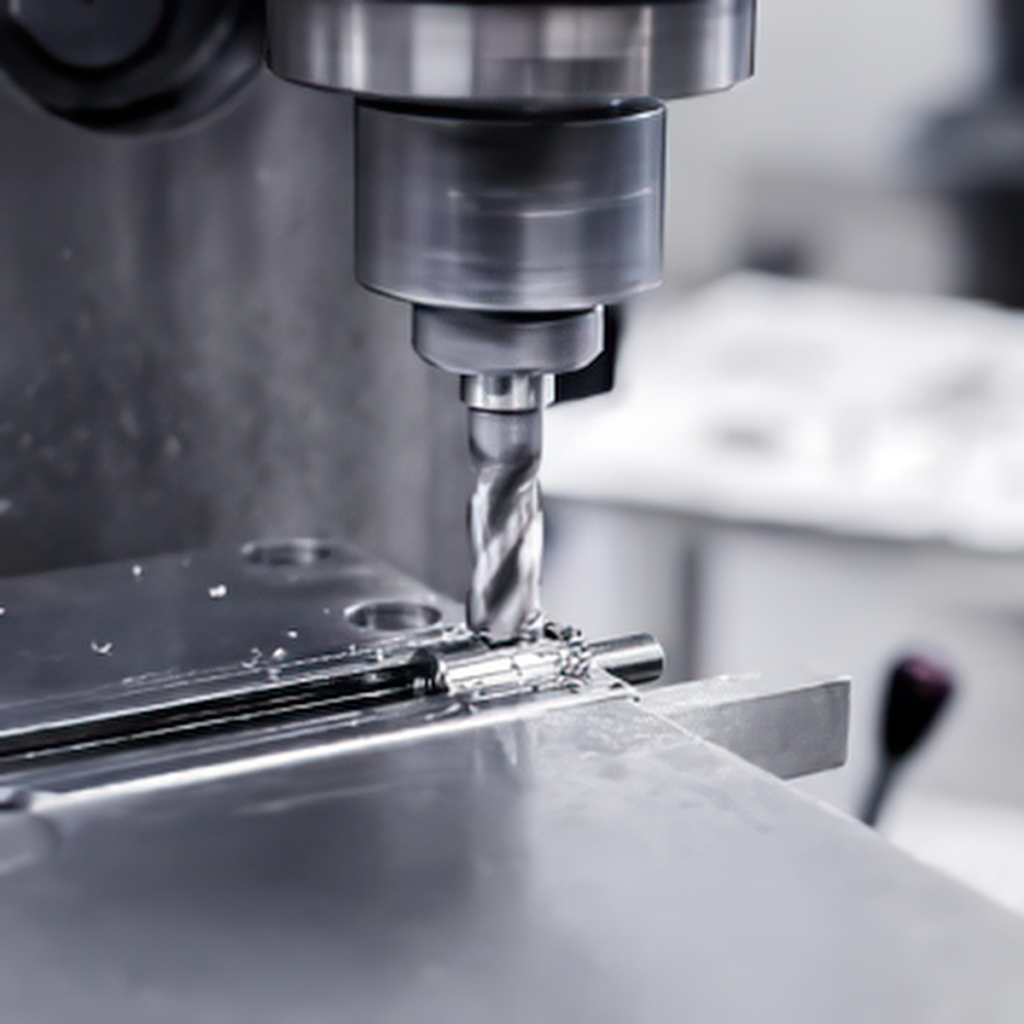
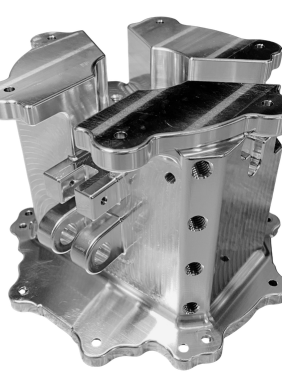
CARR Machine & Tool provides advanced 3 axis CNC machining and 4 axis CNC machining services designed for precision, efficiency, and flexibility. Our multi-axis CNC centers handle a wide range of geometries and materials, so the process proven on a prototype carries straight into production without sacrificing accuracy.
Whether the part requires simple planar milling or complex rotational features, our equipment and skilled machinists ensure consistent, high-quality results. We support industries that demand tight tolerances and full traceability, including aerospace, defense, and high-tech manufacturing.
Our 3-axis machining services are ideal for components that require exceptional flatness, surface finish, and accuracy across X, Y, and Z planes. Using high-speed spindles and rigid fixturing, we deliver precision cuts that minimize secondary operations.
This setup works well for components like housings, plates, and enclosures where multiple operations can be consolidated into a single cycle. By optimizing tool paths and workholding strategies, CARR maintains dimensional control even on intricate features and thin-walled designs.
4-Axis CNC Milling for Multi-Sided Parts
When parts require features on multiple sides or angled geometries, our 4-axis machining capabilities provide the added motion and flexibility needed for efficient production. The rotational A-axis allows us to mill complex surfaces, reduce setups, and maintain alignment throughout the process.
This approach minimizes handling, shortens cycle times, and improves repeatability. Components that would typically require multiple fixturings can be completed in one continuous operation, reducing the risk of variation and improving throughput.
Our machinists program each operation through advanced CAD/CAM software, ensuring that every cut follows the optimized path for accuracy and tool longevity.
3 Axis vs 4 Axis CNC Machining: Choosing the Right Process
The right process depends on where the features sit and how many setups the part needs. We review every RFQ and quote the process that fits the part, not the most expensive machine on the floor.
Choose 3-axis CNC machining for plates, housings, and covers with features on one or two faces. Fewer moving axes mean lower cost per hour and excellent flatness.
Choose 4-axis CNC machining when features wrap around a part, such as cams, shafts with cross holes, indexed slots, or housings with features on four sides. The rotary axis holds alignment between faces without re-fixturing.
Move to 5-axis CNC machining when the part has compound angles, undercuts, or contoured surfaces that need tool access from more than one tilt.
CARR machines a variety of metals and alloys used in regulated industries, including aluminum, titanium, stainless steel, Inconel, and hardened steels. Each material is handled according to its specific cutting parameters, heat response, and surface finish requirements.
Temperature-stable inspection areas and calibrated CMM systems verify every critical dimension, providing documented accuracy for each production run.
Certified Quality and Process Control
All machining operations are supported by AS9100D and ISO 9001:2015 certified quality systems. In-process verification, tooling control, and documented inspection procedures maintain the consistency our customers expect from a trusted aerospace and defense supplier.
FREQUENTLY ASKED QUESTIONS
What is the difference between 3-axis and 4-axis CNC machining?
A 3-axis machine moves the cutter along X, Y, and Z. A 4-axis machine adds a rotary axis that turns the part, so features on several sides can be machined in one setup while holding alignment between them.
When does a part need 4-axis machining?
4-axis machining fits parts with features around a central axis or on multiple sides, such as cams, shafts with cross holes, and housings machined on four faces. It reduces setups and the variation that comes with re-fixturing.
Is 3-axis machining less expensive than 4-axis or 5-axis?
Usually, yes. 3-axis machining has the lowest hourly cost and is the best value for plates, covers, and prismatic parts. We recommend 4-axis or 5-axis only when the geometry needs it.
What materials do you machine on 3- and 4-axis centers?
We machine aluminum, titanium, 17-4 and 15-5 stainless, 4140 and hardened steels, Inconel and other exotic alloys, brass, and copper.
Do you support both prototypes and production runs?
Yes. Prototypes run on the same machines and programs used for production, and every critical dimension is verified on a calibrated CMM.
Partner with CARR Machine & Tool
CARR Machine & Tool delivers the control and precision necessary for high-value components. Whether your part requires high-speed 3-axis machining or complex 4-axis machining, our technology and experience ensure efficient, dependable results.
Contact our team today to request a quote or learn how our multi-axis capabilities can support your next precision manufacturing project.