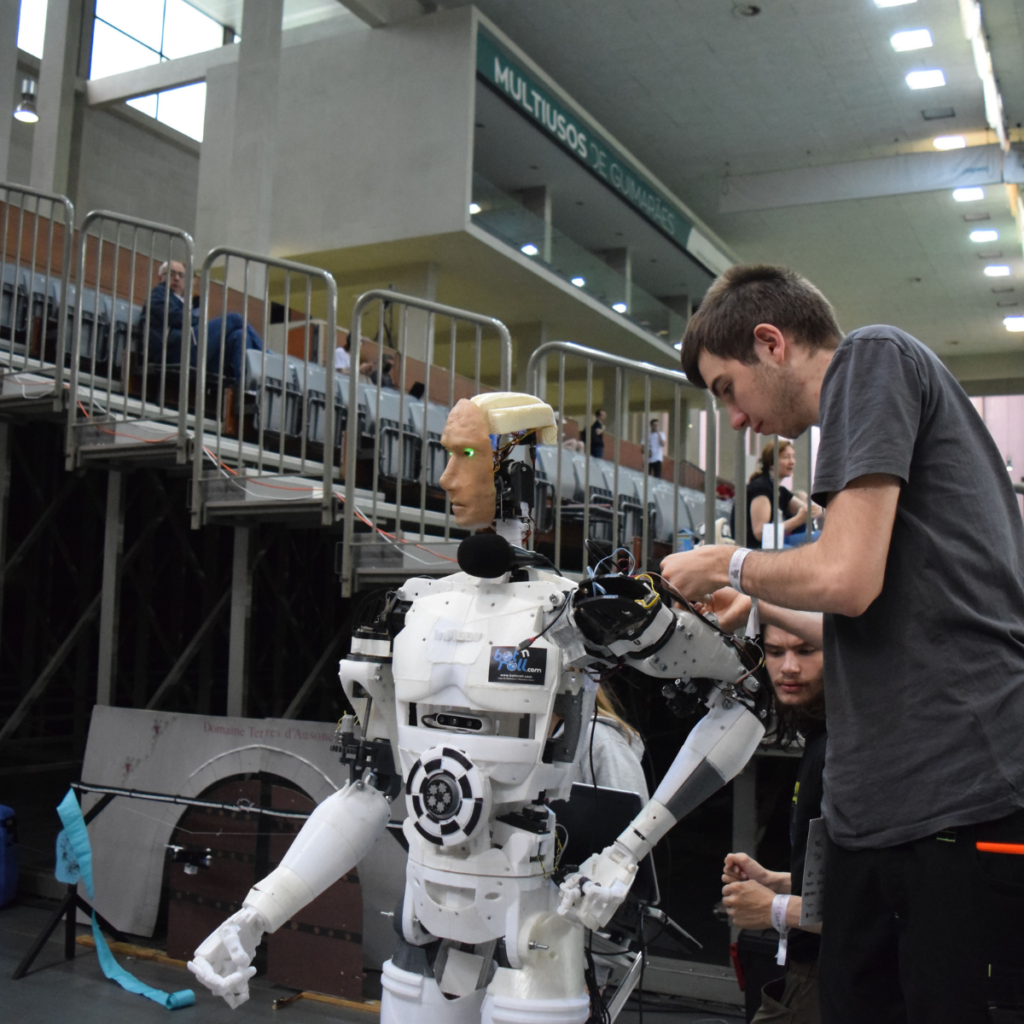
Humanoid and collaborative robot development is moving from research labs into production, and the supply chain has not kept pace. CARR Machine & Tool, Inc. is strategically positioned to serve the emerging technology sector powering the next generation of humanoid robots.
Machines like Agility Robotics’ Digit, Tesla’s Optimus, and advanced platforms such as Figure AI’s Figure 02/03, where precision machined components are mission-critical to performance and reliability.
Carr Machine & Tool is a precision CNC machine shop in Elk Grove Village, Illinois, that machines structural frames, joint assemblies, actuator housings, and end-effector components for humanoid and collaborative robot manufacturers. We understand that your programs cycle through design iterations faster than traditional aerospace or defense programs, and our quoting and production processes are structured to move with you.
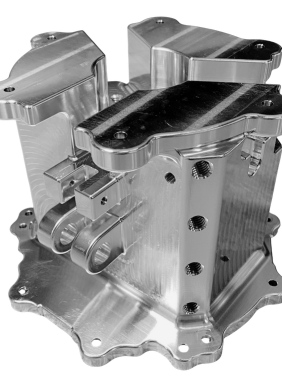
Structural Frames and Linkages: Robot chassis frames, limb linkages, and structural members require both accurate geometry and consistent material properties. We machine aluminum, titanium, and steel structural components with tight flatness, perpendicularity, and true position callouts verified by CMM.
Joint Housings and Actuator Enclosures: Joint assemblies are the mechanical heart of a humanoid robot. We produce joint hardware across aluminum, titanium, and stainless steel depending on your joint’s load, speed, and weight requirements.
Precision Shafts and Spindles: Motion transmission components require tight diameter tolerances that directly affect motion accuracy. We produce these components in alloy steel, stainless, and titanium for robotics applications.
End-Effectors and Gripper Components: We machine gripper jaws, fingertip elements, wrist adapters, and tool change interfaces from your drawing.
Sensor Mounting and Interface Hardware: We machine sensor brackets and mounting plates with the positional accuracy and flatness that sensor mounting requires.
Drive and Transmission Hardware: We machine drive and transmission components with the tolerance discipline that transmission performance requires.
Robot design and manufacturing sit at the intersection of mechanical engineering and software. The physical hardware must be dimensionally precise in ways that directly affect motion accuracy, payload performance, and sensor calibration.
Commodity machining suppliers optimize for throughput on established parts. Precision machine shops like Carr Machine & Tool optimize for accuracy on demanding parts, regardless of whether those parts have been run before.
For robotics OEMs, this distinction matters because:
Joint components require tight bore tolerances, concentricity, and surface finishes that affect bearing fit and actuator performance
Structural frames require flatness, perpendicularity, and true position callouts that affect robot rigidity and kinematic accuracy
End-effectors often combine complex geometries with tight tolerances on gripper surfaces and sensor mounting features
Actuator housings require precise bore sizes, thread forms, and surface finishes that affect motor integration and thermal performance
Many robotics OEMs come to us because their previous machine shop could not keep pace with design iteration, did not communicate schedule proactively, or could not hold tolerances consistently across prototype and production quantities.
We work with robotics customers as a technical partner, not a commodity supplier. That means we read your drawing before we quote, flag problems before they become scrap, and tell you when a design feature will cost you money, so you can decide whether the performance trade-off is worth it.
If you are building humanoid robots, collaborative robots, or advanced automation hardware and need a machine shop that can keep up with your program, we want to talk.
Supporting Iteration-Rate Requirements in Robotics Development
Our quoting & production process accounts for the accelerated revision process, offering:
Fast Quoting: We respond to robotics RFQs with urgency. Your development schedule does not have margin for a three-week quoting cycle at your machine shop.
DFM Feedback: We review your drawing before quoting and flag any features that will add significant cost or schedule risk. Early feedback allows design revisions before tools are cut.
Prototype and Production in the Same System: When a design is validated and you move to production quantities, you are not re-qualifying a new shop or resetting quality documentation. We run both through the same process.
Honest Scheduling: We tell you what we can hit before you commit to a delivery date. If your timeline is not achievable, you find out at quoting, not at shipment.
FREQUENTLY ASKED QUESTIONS
Do you have experience machining components for humanoid robots?
Yes. We machine structural frames, joint housings, shafts, end-effectors, and drive system components for robotics OEMs. Robotics hardware spans a range of complexity, from simple brackets to highly toleranced joint assemblies, and we are equipped to handle both ends of that spectrum within the same quality system.
How quickly can you quote robotics prototype parts?
We prioritize quoting for robotics programs given the iteration rate these programs require. For standard prototype quantities, expect a quote turnaround of 2–3 business days. For complex multi-feature parts or tight-tolerance assemblies that require additional process planning, we will tell you upfront if we need more time.
Can you support production quantities as the design matures?
Yes. We run prototype and production quantities through the same quality system. When your design is validated and you move to higher volumes, you are not re-qualifying a new supplier or rebuilding quality documentation. The transition is a change in order quantity, not a change in process.
What tolerances can you hold for robotics components?
Achievable tolerances depend on geometry, material, and feature location. For bore fits, we regularly hold H7/h6 and tighter fits on housing bores and shafts. For positional callouts, our 5-axis capability and CMM inspection support tight true position requirements across complex parts. Share your drawing and we will confirm achievable tolerances on your specific geometry.
Do you perform design for manufacturability reviews for robotics parts?
Yes. We review your drawing during the quoting process and provide DFM feedback as part of the quote. For early-stage robotics programs, this feedback can identify features that add significant machining cost or schedule risk before those features are locked into a design.
Are you able to support NDAs for robotics programs?
Yes. We routinely sign NDAs for robotics customers who are working on pre-commercial designs and programs. Contact us to initiate an NDA prior to submitting drawings if required.
Partner with CARR Machine & Tool
As humanoid robotics continues toward broader commercial deployment in logistics, manufacturing, and human-assistant applications, the backbone of that evolution is fabricated with high-precision CNC machining for the robotics industry. CARR Machine delivers that backbone: components that uphold dynamic performance, reliability, and safety in cutting-edge robotic systems.
Contact us today to get started with your humanized robotics project!